

EDUCATION AND DIGITAL SKILLS IN NORTH WEST NIGERIA
Written by Collins Nnabugwu
Across Nigeria’s North West, climate change is placing growing pressure on livelihoods, food systems, infrastructure and local institutions. Meeting these challenges requires more than climate awareness. It requires practical education, digital skills and stronger public and private institutions able to turn knowledge into action.
The North West Climate Academy is being developed as part of the North West Climate Initiative to help provide that foundation across seven states and 186 Local Government Areas. The Academy, designed around the mandate of the Office of the
Senior Special Assistant to the President on Community
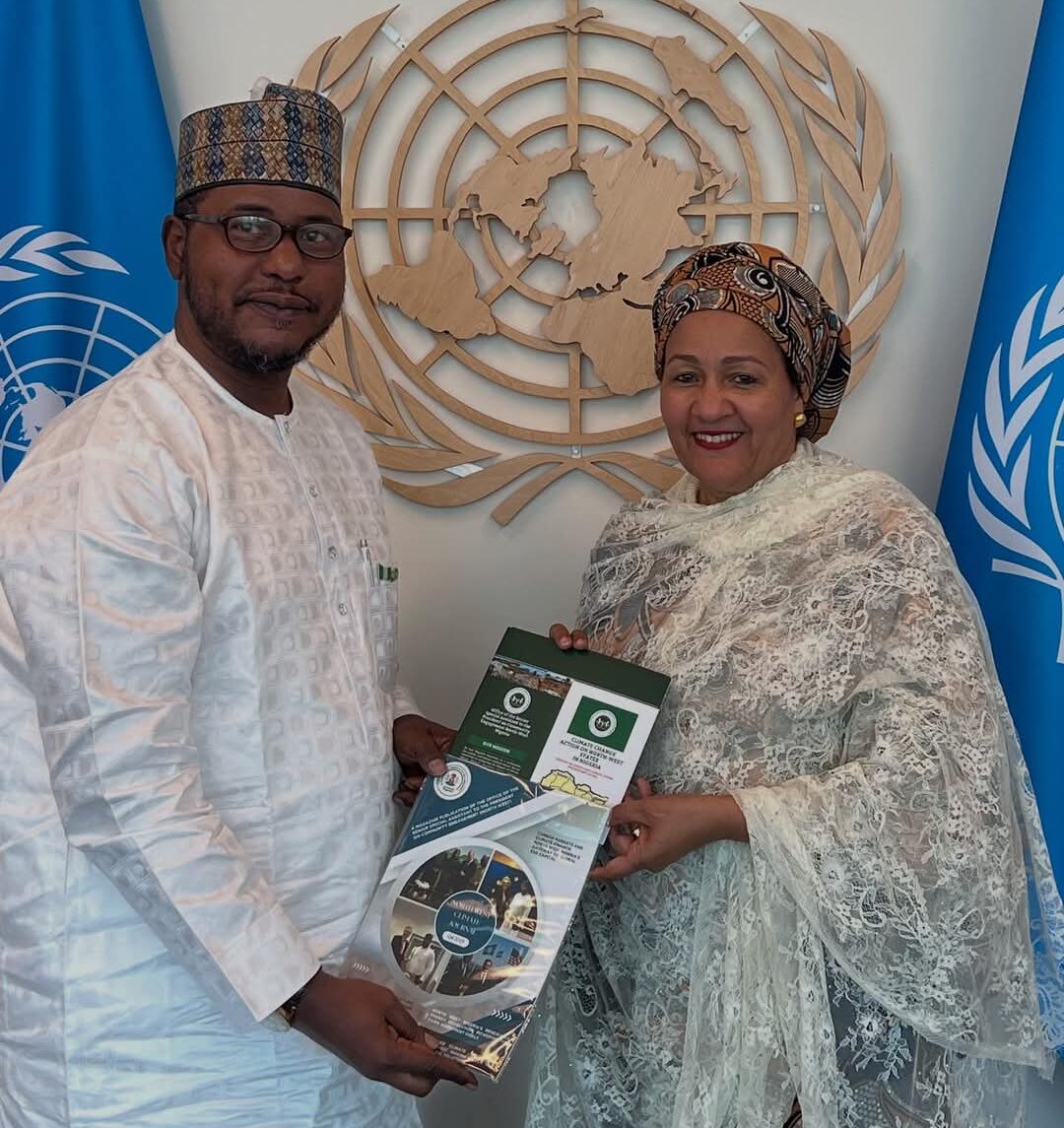
Engagement (North West), with a focus on bringing climate action closer to communities and supporting the Federal Government of Nigeria’s Renewed Hope Agenda. In 2023, Nigeria’s president appointed Abdullahi Yakasai as Senior aide charged with this critical task.
Its focus includes climate and environmental literacy, artificial intelligence, mobile technology, clean energy, climate resilience, climate finance and community engagement. The Academy is designed to connect learning with the practical needs of institutions, communities, young people and businesses working to respond to climate change.
A DUAL-FACING LEARNING MODEL FOR CLIMATE ACTION The Academy serves both the public and private sectors.
For the public sector, it supports capacity-building for public servants and subnational personnel working in Local Government Areas (LGAs) and state institutions. Participants will develop practical capabilities related to climate planning, risk awareness, project identification, safeguards, technical preparation, financing pathways and impact reporting.
For the private sector, the Academy will support the upskilling of young climate ambassadors and advocates, enterprise owners, startups and small and medium-sized enterprises. Participants will be able to build knowledge and skills relevant to green enterprise, clean energy, digital technology, climate-resilient businesses and community-based implementation.
This dual focus reflects the reality that effective climate action depends on both capable institutions and an active ecosystem of people and businesses able to develop and deliver solutions.
CONNECTING EDUCATION WITH IMPLEMENTATION
The Academy is being developed alongside a Climate Investment Marketplace and a Climate Fund. Together, these three strategic pillars are designed to connect education and skills development with project origination, technical preparation, investment readiness, climate finance and implementation.
The approach is consistent with a wider understanding of Education for Sustainable Development, in which sustainability is connected to teaching, institutional practice, governance and community participation. In the North West, this means linking climate learning to local government capacity, energy access, agriculture, resilience, enterprise development and finance.
The Initiative is formalizing partnerships with the Federal Ministry of Environment through ACReSAL, the North West Development
Commission (NWDC), the Nigerian Climate Innovation Center
(NCIC) and the National Power Training Institute of Nigeria (NAPTIN), alongside other strategic institutions and technical partners. These partnerships would support climate education, renewable-energy workforce development, innovation, project preparation and local climate delivery.
Cyber Future Academy (CFA), with deep experience in Artificial Intelligence, GovTech and Digital Public Infrastructure (DPI) will support the Academy’s technology infrastructure while the Global Marketing and Management LLC, a USA-based public-relations consulting firm led by Dr. Mea Boykins is providing global access, advocacy, partnership communications and international engagement.
FROM THE NORTH WEST TO NATIONAL MODEL
The initial focus is the North West, where the Academy can be tested and refined across seven states and 186 Local Government Areas (LGAs ). The planned North West Climate Summit in Abuja is expected to provide an additional platform for dialogue, participation and partnership around these priorities.
Following a successful pilot, the model has potential to scale across Nigeria. Such expansion could create a wider platform for climate-ready education, digital transformation, youth leadership and inclusive green growth.
By bringing public institutions, young people, businesses, technical partners and climate-finance actors into a connected learning and delivery framework, the North West Climate Academy aims to help communities build the knowledge, skills and institutional capacity needed for a more resilient and sustainable future.